Friday, 17 February 2012

The Sensorium Of God

This is the second book in Stuart Clark's trilogy The Sky's Dark Labyrinth, and as a fan of the first book it would be rude not to delve into the second.  Set around the turn of the 17th Century this (technically fictional) account of Newton's theory of gravity lends some much needed background to the story of the apple. 

As with his account of Galileo and Kepler this reads as a historical novel, although it's pretty tricky to distinguish fact from fiction - Clark is good enough to point out where he's embellished and dramatised events and you're left with the feeling that you're reading a pretty faithful account of events; if the protagonists were given the right of reply I think they'd be firmly in nitpicking territory.

The characterisation is wonderful - Clark's lucky enough to have picked some of the greatest characters in scientific history, from the dour and grumpy Newton to the exuberant and childishly enthusiastic Edmond Halley.  The author's tweets as he was writing it suggested he was having great fun with them and it certainly shines through.  

But enough of the standard book review stuff, it's fun and well written, that's all you need to know.  On to the science!

This book really does cover the emergence of modern science as we understand it.  Much of the action is centered around the fledgling Royal Society, where political infighting and closely guarded secrecy abound.  Kepler's laws of planetary motion were well understood at this point, but the mechanism was still up for grabs.  The idea of a invisible force acting through space was understandably controversial - after all, there was no testable way to differentiate that from a big invisible piece of string, and without any burden of proof theories abounded.  Cue Newton, who postulated that the force bringing an apple to the ground (a very familiar and Earthbound force) was the same that held the moon in orbit and could explain the origin of Kepler's laws.

The charming thing about Sensorium Of God is that Clark doesn't simply trot out the "obvious" theories that eventually became part of high school science.  He explores the competing theories, the ones which turned out to be wrong, and he does so with his head firmly planted in the available knowledge of the time.  Being wrong is the basis of physics, the whole discipline is built around trying to disprove theories, and there's a great deal of charm and insight to be found in the destruction testing of an idea.  The screening theory crops up for example, an analogy ship's captains were well aware of at the time, and a seductive theory because of its elegance and ease of understanding.  This turned out to be wrong, although a variation would later crop up in mid-20th Century quantum theory.  Experiments are carried out to test the inverse square law proposed by Newton and others, but fail simply because they didn't have the resolution, creating red herrings.  Mathematical models are proposed, tested, and fought over, books are written and then suppressed, then published, then fought over again.  

This is in many ways the story of the birth of the modern scientific method and draws many modern day analogies, both good and bad.  They even have funding problems, and you don't get much more "contemporary science" than that.

Stuart Clark
Polygon Books
ISBN: 9781846971877

Monday, 6 June 2011

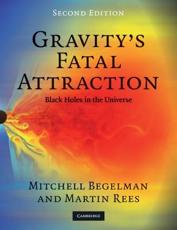
Gravity's Fatal Attraction - Black Holes in the Universe

or, How I Learned To Stop Worrying And Love Black Holes.

Everybody has heard of black holes, they're up there with the Big Bang and E=mc2 in the public physics consciousness.  They've gone from a rather odd solution to some of Einstein's equations, to science fiction staple, to conventional astrophysics in around a century, and nobody has ever seen one.

There's certainly a lot of circumstantial evidence though, notably a lot of extremely high energy events a (thankfully) very long way away, and a very, very dense object at the centre of our own Milky Way called Sagittarius A* (pronounced "A-star").  Current theories of physics also suggest we may find oddities like miniature black holes created in the moments after the Big Bang; stranger and more speculative still, our entire Universe looks in many ways like the view from the inside of a black hole's event horizon. 

Mitchell Begelman, Professor of astrophysical and planetary sciences at the University of Colorado, and Martin Rees, the UK Astronomer Royal and master of Trinity College Cambridge certainly have a pedigree when it comes to these strange objects, and they've written a lucid and very beautiful account of the current research.   This falls into one of my favourite areas of science books - it's either an extraordinarily well presented undergraduate text, or a popular science book that goes that bit further, purposefully ignoring the "no equations" dictum.  There are equations, there are graphs.  And diagrams, photos, diagrams and graphs overlaid on photos and so on and so forth.  They're all glossy full colour and very pretty for the most part, and it's a far better book for it.  The diagram-on-photo of stars frantically orbiting something very massive and very small at the centre of out galaxy is the first thing I've seen that actually convinces me black holes exist outside of theory.  The prose is flowing, informative and packed with interesting side notes and magazine style sidebars and sub-articles highlighting important concepts like spectroscopy or hyperbolic geometry.

Three hundred pages of cutting edge, high level astrophysical research rewritten for people who understand the odd graph and like pretty pictures - fantastic.

Incidentally, go and see Martin Rees give a lecture at some point if you can, he's a very interesting man indeed.


Gravity's Fatal Attraction
Mitchell Begelman & Martin Rees
Cambridge University Press
ISBN: 9780521717939

Saturday, 30 April 2011

Author Interview: Stuart Clark on The Sky's Dark Labyrinth

Stuart Clark is an astrophysicist, astronomy journalist and author of some twenty titles including The Sun Kings, which was short-listed for the 2008 Royal Society Prize for Science Books. 
Image courtesy: Simon Wallace 
www.meltingpotpictures.co.uk
His latest work, The Sky's Dark Labyrinth (full review here) is a fictional account following Kepler, Tycho and Galileo as they struggle to reconcile new astronomical theories and the first telescopically aided observations with the church's long-standing geocentric model.  He's been kind enough to, in his own words, "take a break from trying to get into Newton's head" and talk about his new book. 


Why did you write a work of fiction rather than a biography or straight historical account?
Every time I start a new project I wonder what the best way will be to tell the story. I see all of my books as stories, whether they’re non-fiction or fiction. They must have a narrative flow to engage the readers and keep them with you. My previous book, The Sun Kings, spanning the 19th century, was written as a three-act play although it was non-fiction. The essence of the ‘hero’ passed between three characters, William Herschel, Richard Carrington and Walter Maunder as they fought for the same goal: recognition of the Sun’s magnetic power over Earth. It was narrative non-fiction but at least one newspaper reviewed it as fiction. Surprisingly, they still quite liked it.
The idea for writing The Sky’s Dark Labyrinth as a fictional trilogy came about through conversations between my agent and me and with an editor. I’ve always wanted to publish fiction and the idea of relating these amazing stories about these particular people in a fictional manner appealed instantly. I went away and wrote some test passages, passed it by some friends and editors, took their comments on board and decided to go for it.
These mathematicians’ and scientists’ lives took place against backdrops of immense sociological change: wars, rebellions, persecution, political intrigue and scandal. That kind of drama lends itself to fiction but can often seem superfluous in non-fiction. So, in a strange way, I think the choice of fiction means I can tell these stories more completely than if I were writing non-fiction. 


How much poetic license have you introduced?  Tycho is a bit over the top, surely?
If anything, I toned Tycho Brahe down! We meet him in his declining years, not at the height of his powers and eccentricity. What a great character with his freak show of an entourage and his obsessions for despotism and astronomy. You’re right; you couldn’t make it up and be believed.
I have taken some licence. In places I have eased the strict chronology, or simplified events to facilitate the flow of the story, but the majority of it is accurate. For example, I have Kepler caught in the midst of the battle in Prague. Now, I don’t know he was actually involved in the fighting, but he lived so close to the market square where the massacre took place that it’s a least plausible, and I felt appropriate for the story.
I aimed for essential truths in the story by performing enormous amounts of research, reading letters and books written by all these people alongside well-researched papers and books written about them by other people, to see whether I agreed with their interpretations.
I visited locations where the scientists had lived and museums to see artefacts of their times to really flesh out the characters of these essentially ordinary people who were blessed with extraordinary gifts and talents. I used some of their written phrases as dialogue, where it was appropriate.
There’s only one entirely fictional character in the first book, Cardinal Pippe. I invented him as a device to represent the pervasive mindset that Galileo’s trial was about religion versus science. The truth of the trial is so much more complex and fascinating than ranting religion against paragons of rationality. Galileo was not a modern scientist. He had amazing insights and planted the seeds of what became science but that was not why he was persecuted. It was his dabbling in theology that got him into trouble, and the Jesuits, who had been his protectors, made him their scapegoat him to protect themselves. What an extraordinary piece of backstabbing – it had to be a novel! 


So some of the greatest astronomers in history also did posh people's horoscopes for a living - that's a tad embarrassing for science isn't it?
Not at all, the science of astronomy came out of the ancient art of astrology. Astrology was a way of making sense of the world – it was the first theory of everything and by that I mean a way of linking the small to the large. Nowadays our theories of everything try to link particles to galaxies, back then they linked individuals to planets. So many people at the time believed that it worked without any real proof. Kepler was the first to ask the question, “Why did it work?” and began to look for proof of a demonstrable agency that could link the planets to the Earth and ultimately individuals. He understood that the tides were the result of a force coming from the Moon – something that Galileo never accepted – and so cautioned against the wholesale rejection of astrology on those grounds.
It’s where the phrase about ‘not throwing the baby out with the bath water’ comes from. Kepler was defending astrology because he was sure that the Moon was exerting a force on the oceans. I tried and tried to work that phrase into the book, but every time I put it in, it just sounded too modern and a cliché. So, I left it out.
Ultimately, Kepler’s insight into the movement of the planets and the Moon’s influence on the tides set the stage for Newton. In book II of the trilogy, The Sensorium of God, I discuss Newton’s alchemy, which again is an attempt at a theory of everything that didn’t work out. One thing is clear, without Newton’s belief in alchemy, he would never have conceived of a force that acted across space without a medium to carry it – that was a concept straight out of the occult. 


How many of the original manuscripts and astronomical devices survive today?
A considerable amount, fortunately. I saw a large quadrant, dating from 1632, very similar to one that Tycho used in the Boerhaave Museum in Leiden, Holland. I was lucky enough to be in Beijing and visited the old observatory there. Most of those instruments are copies of Tycho’s, constructed by the Jesuits during the 17th century. Fantastic instruments, and of course, all embellished with Chinese dragons.
I had an epiphany in Sweden at the Nobel Museum where I had been invited to view a travelling exhibition from the Galileo museum in Florence. I looked through a replica of Galileo’s telescope – a real one was far too precious to touch. Instantly, I realised why some people claimed not to see the moons of Jupiter. Optically, they are really difficult to see through, the field of view is minuscule; it’s like peering down a well.
(L-R) Europa, Ganymede, Callisto and Jupiter
Modern 300mm lens, heavily cropped. Photo: Geoff

The Museum even made us food typical of Galileo’s time, including his favourite biscuits that his daughter would make for him.
One of the facts that I uncovered was a continuing theme throughout history of the way these clever people always had to beg for financial sponsorship, ingratiating themselves with the wealthy. In a way this still goes on today, with universities having to curry favour with governments and large successful companies. 


What do you think Kepler would have made of modern day cosmology?
I think he would be publicly embarrassed but privately pleased that there is a NASA spacecraft named after him orbiting right now finding planets around other stars, and showing that his laws of planetary motion hold true for other planetary systems as well.
He would feel vindicated that we have finally found the parallax, which he so desperately wanted to find in order to prove that the Earth moved. And I’m sure he would be speechless that computers can be programmed to take the drudgery out of calculations – remember he did it all by hand, pages and pages of calculation, year after year.
However, there is no doubt at all in my mind that he would have been horrified by the secularism that now dominates science. He worked, like all the early astronomers including Galileo and Newton, for the glory of God. They thought that the work they were doing brought mankind closer to God, not further away. He might even see modern cosmology as a wholesale perversion of the seed he sowed.
One of my goals with the next two books in the trilogy, as I follow the story of Newton and then Einstein, is to show the growth of this secularism, and the way science changed people’s perception of what religion is and can offer. I’ve nearly finished the second book – and believe me Newton is, in his own way, as outrageous as Tycho! And I can’t wait to get started on the third. The father of the big bang is a man called Georges Lemaître. He was an exceptional mathematician, a student of the great astrophysicist Arthur Eddington, and a Jesuit-educated Roman Catholic priest. The last fact put him at a distinct disadvantage among the increasingly atheistic astronomers. Then, he discovered what looked like a moment of creation in Albert Einstein’s Theory of General Relativity – and had to convince everybody that he wasn’t working to some secret religious agenda.
What a gift of a character to write!


The Sky's Dark Labyrinth is published on the 1st of May 2011.


Monday, 11 April 2011

xkcd (volume 0)


When I need to blow off steam, I find a particularly stupid blog comment and reply with an exhaustively researched word-by-word rebuttal, which I sign "Summer Glau".

Randall Munroe


If you're not aware of the webcomic and geek phenomenon that is xkcd then I envy you.  Honestly, it would be lovely to have not seen it and have hours and hours of guiltily geeky sniggering ahead of me.

And now Randall Munroe has taken the plunge into real life and collated his favourite strips in a book.  The aptly named volume 0 (programmers usually start counting from zero) is very possibly the funniest science based comic book ever produced.  If you're into physics, maths, humans, hacking, ferrets, sunsets or getting dumped by people who just don't get the importance of a proper zombie plan, then there's something here for you.  It's very educational too - whether it's COBEs astounding confirmation of theory or pseudoforces in rotating reference frames, you'll laugh, you'll giggle, and you'll look something up on Wikipedia.

Bonus time!  The book is published by Breadpig, an "uncorporation" who channel their profits into individuals and organisations who "make the world less sucky".  xkcd's profits go to Room To Read, who build schools and fund literacy projects in Laos, Sri Lanka, Nepal and India amongst others.

You can buy it directly from the xkcd store, or from books'n'mortar bookshops.


Edinburgh Science Festival 2011


Through the wonders of modern technology I'm typing this while sat in Edinburgh University's Informatics Forum, host to most of the Edinburgh Science Festival's book-related talks.  The next two weeks will see some highly talented science writers take to the stage to explain and entertain.

Quantum author Manjit Kumar has already explored the philosophical and physical implications of quantum theory through the eyes of Einstein, Bohr and others, shedding light on a theory that is a little unbelievable on the face of it, even to those who discovered and developed it in the early twentieth century.  I haven't read his book yet, but if he writes as well as he speaks it'll be well worth it.  (As a penance he's challenged me to read and review Roger Penrose's highly technical and speculative Cycles Of Time...watch this space and see if I can make any intelligent comments beyond the choice of font and quality of binding.)

Ian Sample brings us back to the present with Massive, a popular look at the Higgs boson, from Edinburgh local Peter Higgs conception of it in the 1960s to the LHCs current efforts to find a trace of it amongst a truly mind-boggling quantity of data.  In fact, the LHC is something of a recurring theme at this years festival, with physicist Jon Butterworth and engineer Lyn Evans talking to Robin Ince about the practical challenges of an experiment that spans two countries, then Emma Sanders and Gian Giudice talking about everything from extra dimensions to (aptly) pop-up books.  Regular readers will be aware of Voyage To The Heart Of Matter, the glorious bit of paper engineering I wrote about last year, and I can heartily recommend Giudice's Zeptospace Odyssey, which isn't a prog-rock album as you may think, but a book about the LHC concentrating on the actual physics underlying the experiment.

Away from particle physics Kevin Dutton spoke about Flipnosis: persuasion, mind games and emotional influence.  He sold quite a few books for some reason...a suspiciously high number in fact...

Current SciFest Bookshop Leaderboard

Flipnosis
Kevin Dutton

Quantum
Manjit Kumar

Voyage To The Heart Of Matter
Emma Sanders & Anton Radevsky

Massive
Ian Sample


There are a huge number of events on over the next two weeks, not just talks from authors and a chance to get a book signed.  Fancy a post-mortem at Edinburgh Zoo?  A drink at the Blood Bar?  High voltage demonstrations in the pub?  There's something for everyone and all ages, so get involved if you can.

Saturday, 2 April 2011

The Sky's Dark Labyrinth


"Truth is the daughter of time, and I feel no shame in being her midwife."
Johannes Kepler

Religious conspiracy, coded letters, a barely sane astronomer with a clairvoyant dwarf, allegations of heresy and witchcraft...at first glance Stuart Clark's new book really does sound like something from the Dan Brown school of writing.  That's probably a little unfair on both authors, because in many ways this is the exact opposite of Brown's modus operandi; the real challenge here is picking out the parts of the story that aren't essentially true.

Clark, you see, is not a novelist who has decided to dip his toe into the world of astronomy, he's a PhD holding astrophysicist who specialises in science journalism, which goes a long way to explaining the historical veracity underlying The Sky's Dark Labyrinth.

It's personal confession time...I know this story quite well, enough to hold my own view on events and argue them in front of a real historian without blushing too much...and Clark's account is superb.  The spat between Galileo and the Catholic church is infamous, with the general perception being that Galileo had the temerity to suggest the Earth orbits the Sun, and was promptly tried and imprisoned for his trouble.  The truth, when you dig into it, is a little more complicated. Clark takes the main protagonists, Tycho Brahe, Johannes Kepler and Galileo Galilei, and skilfully picks apart three very different men with equally different ideas about how the universe works, against a vivid backdrop of southern Europe at a time of huge political and religious upheaval.  Kepler, with his remarkable mathematical ability, tries to tease the data he needs from Tycho's private and closely guarded collection.  Galileo turns the newly invented telescope towards the skies, and the church struggles to maintain their authority over a world in flux.

It's a well balanced and fair account, far removed from a naive religion versus science debate.  The greatest astronomers in history have family problems, crises of faith, run out of money and even cast horoscopes on the side while the church does its best to research and adapt to new ideas without bringing the whole house of cards crashing down under the weight of its own logic.  

It's one of the great true stories of human imagination and inspiration, a fascinatingly detailed history, and a cracking good read.

Oh, OK, I give up.  What's a crap astronomical pun on "brilliant"?
Stellar?
A super-nova-of-a-novel?
A work of gravitational gravitas?

Suffice to say, great book.

As a bonus, it's the first part in a trilogy, the following parts covering Newton and Halley, then Einstein and Hubble, tying together four hundred years of cosmology.  I can't wait for a TV series, ideally directed by Joss Whedon.


Published 1st of May 2011

The Sky's Dark Labyrinth
Stuart Clark
Polygon (Birlinn)
ISBN: 9781846971747


(Review based on an uncorrected proof supplied by the publisher)

Friday, 4 February 2011

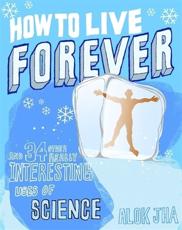
How To Live Forever

Writing a book about "science" is always going to be a tricky affair.  For starters, there's a lot of science.  Biology, physics, geology...the list goes on for a very, very long time, and nobody can be an expert in everything.  Alok Jha has taken the task on though, and has done a pretty good job of it.  How To Live Forever (and 34 other really interesting uses of science) takes a huge range of scientific ideas, from the brain's underlying principles to quantum mechanics, basic botany to fringe biology, and explores them in a series of essays.

It's a book that's walking a tightrope, and it does it rather well.  The wackier elements (and you've got to have some wild speculation in a popular science book) are explored in a suitably sober manner without getting too science-fiction, and the more established science isn't just a rehashing of the usual textbook essays, it's all covered in a lively and informal manner. 

It reads in many ways like a compilation of articles from a popular science magazine rather than a book, with quirky illustrations, sidebars explaining the trickier concepts and diagrams galore.  Whatever your favourite field, there's something in here for you, along with a good few other things you never realised you were interested in.

Just one word of warning: some books come with an automatic "in your head soundtrack", and I've not been able to get Queen's Who Wants To Live Forever out of my head whilst reading this.  In fact, it's not been this bad since Bruce Hofkin's Living In A Microbial World.  (And I am a microbial girl.)


How To Live Forever
Alok Jha
Quercus
9781849164825


(A free copy of this book was provided by the publishers for review)

Sunday, 16 January 2011

Maths 1001

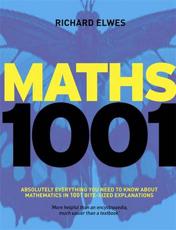
It's 1001 things about maths, all of them explained in an average of around three paragraphs.  That simple.

Of course, anyone can do that.  The notable thing about Maths 1001 is the sheer force of clarity it's all presented with.  From the very basics of addition and multiplication, through geometry, discrete maths, probability, it's always explained in crystal clear, flowing english.  Metamathematics and mathematical physics also get an honourable mention, and the text is peppered with the historical curiosities behind the proofs and theorems.  If you want to be geeky about it, the comprehensivity / entertainment ratio is near optimal.

The range of the 1001 entries is spot on, a good mixture of the most important and the most interesting; you'll almost certainly find new gems in here unless you're a postgrad mathematician or beyond, and all for a penny short of fifteen pounds for a title that's pushing textbook size.

There's also something else that makes me love this book, and I'm afraid I'm going to have to lower the tone here.  There's a particular class of books that present short, snappy bites, and in no particular order.  They're books that are ideal for the water closet - the toilet, the smallest room in the house if you prefer.  "Books for bogtime" if you're British.  No serious reader will ever deny having favourite bog books, and I've just found another.

Maths 1001
Richard Elwes
Quercus
ISBN: 9781848660632

Sunday, 28 November 2010

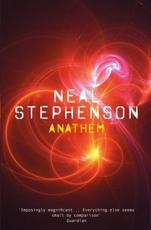
Anathem

It's been a while since the last review, my apologies.  The two main reasons are that work has been a tad busy, compounded by the fact that I've been wading through Neal Stephenson's 928 page Anathem.

This is fiction we're talking about.  It's somewhere on the boundary between hard sci-fi and speculative fiction if you want to try to pigeonhole it, but the ideas it's playing around with are even more borderline, dancing between mathematics, physics, metaphysics and philosophy.

Science fiction can sometimes be a little lacking in the more traditional elements of literature, like character development and plot, instead relying on the ideas involved to carry the story forward.  Clarke's 2001 and Crichton's Andromeda Strain are good examples, and there's nothing wrong with it if the ideas are good enough.  Anathem, on the other hand, meshes some very big ideas with an elegant and intricate story set in a detailed, imaginative parallel universe.  It's witty, it's smart, it even has its own soundtrack online.

Fraa Erasmus is one of the Avout, a monk class set aside from the rest of the world.  He's a Decenarian in the Concent of Saunt Edhar.  Yup, there's a lot of new language to get to grips with, helped along with regular excerpts from "The Dictionary" and a glossary at the back.  It's tricky at first, with a lot of flicking back and forth, but does add to the whole feel of the novel.

The big difference between our world and Erasmus' is that his monk class are, generally, atheistic.  The Avout are mathematicians, philosophers and theoretical physicists.  Their only possessions are their bolts, cords and spheres (a reference to the basics of geometry) and their only media chalk, ink and stone.  From these basics, and some hard thinking, they probe the nature of the reality around them.  Yes, it's easier with computers and particle accelerators, but that was tried and, shall we say, went badly.  They do, however, have telescopes, and one day somebody spots something which would ruin the plot if I continued...

So that's all I'll say on the storyline, and on to the ideas...

Ideally, you'll be aware of the basics of the history and philosophy of science before you pick this book up, because it's packed with direct and more subtle references from Plato to Einstein.  The main science theme is Platonism, the nature and existence (or otherwise) of mathematical objects.  For example, Pythagoras' Theorem was true before any human discovered it...so does the mathematically perfect right angled triangle actually exist, and if so where?

Tegmark's many-levels-of-multiverse is covered, as are orbital mechanics, fluid dynamics (in zero g no less), and the frankly confusing final few chapters read a little more smoothly if you consider them in the light of quantum suicide and quantum immortality thought experiments.  I'm kind of disappointed that I've finished it, but this is the kind of book that will leave you reaching for many, many others just so you can go back to it with a greater understanding.

ISBN: 9781843549178
Atlantic Books

Tuesday, 12 October 2010

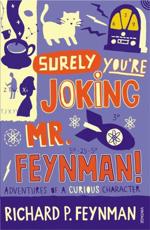
Surely You're Joking, Mr. Feynman!

Richard Feynman, in case you've not heard of him, was a theoretical physicist who worked at Caltech for many years, formulated large parts of modern quantum theory, and was heavily involved in the Manhattan Project, developing the first atomic bomb.  He was also a tad eccentric.

This book is a compilation of many taped discussions he had with friend Ralph Leighton, and they offer a thoughtful and often hysterically funny insight into the mind of one of the great 20th Century physicists.  There's no real structure to the book, beyond being roughly chronological, it's more of a long series of anecdotes about Feynman's personal life, work and views on life, the universe and everything.  There are tales of his sideline as a bongo drummer, black eyes picked up in some disreputable bars, rants about the idiocy he found in the military and the government, lessons in being a bloodhound and some particularly evil practical jokes.

His safe-cracking exploits are particularly funny, as he recounts repeatedly breaking in to the (supposedly top secret) filing cabinet and then safes at the military base hosting the Manhattan Project.  After developing a reputation as somebody who could get into any safe on the base he finally demonstrated that even the commanding officer's wasn't secure by breaking into it in front of him.  This led, not to improved security as you might expect on a military base, but to a standing order that Professor Feynman was not to be left alone with a safe.

There are thoughts on physics in there, but this isn't really a physics book, it's a wonderful window into the mind of one of the great eccentric geniuses of the last century.

It's one of several compilations of writings and recordings: see also What do you care what other people think? and Don't you have time to think?, on top of his bestselling and more technical Feynman Lectures On Physics.


Surely You're Joking, Mr. Feynman!
Ralph Leighton & Richard Feynman
CCV Publishing
ISBN: 9780099173311

Sunday, 5 September 2010

Subject Poll Results

 So the results are in - physics and cosmology take the win, closely followed by maths and history of science.  So you'll probably see more of that in the future.  (Weirdly the last review of Music Of The Primes covered all three quite nicely, pure coincidence I promise.)

That doesn't mean I'm going to ignore biology or psychology though - the reviews are mostly books I've read recently, or dredged up from my last 30 years of reading.  

Tuesday, 31 August 2010

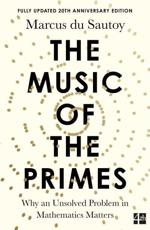
The Music Of The Primes

A two, a three, a two, three, five, seven...

It's how Reimann's band's drummer would have counted in....

No?  Oh come on, that was funny, I spent ages on that.  No?  Really?  Oh well.

Rest assured, Marcus du Sautoy's The Music Of The Primes is far more entertaining than my geeky half-jokes.  Don't get me wrong, there are geek-jokes galore in there, mostly from original sources such as the angry young man that is Galoise, or Gödel's startled pigeon, and that's the great strength of this popular mathematics book, the life it breathes into the world of mathematics.

Not only mathematics, but a very specific area of it, prime numbers.

Prime numbers seem innocuous at first glance, a little mathematical oddity that everybody learns about at primary school.  du Sautoy throws us straight in at the deep end with Reimann and his jottings where he, in passing, has an idea about the frequency of prime numbers.  This idea is one of the big ones...in fact, with the recent fall of Fermat's Last Theorem (see the excellent book with the same title by Simon Singh) and the Poincaré Conjecture, the Reimann Hypothesis is probably the biggest, baddest, longest standing problem in mathematics.  There's still a million dollar bounty out there, if you fancy your chances.

I wouldn't though, it's driven at least one person to madness, and taken a few to the borders.  It's the stuff that techno-thriller spy movies are made of (literally, see Sneakers) and has been implicated in at least one fatal duel and one national revolution.  It's been the subject of, and I kid you not, two Nobel Prize level practical jokes.  If the Reimann Hypothesis is a film character it's dangerously close to being Sherlock Holmes crossed with James Bond.

That's just my reading of the vivid world that du Sautoy paints, the human backdrop to a mathematical enigma that has floated around teasing humanity for over a hundred and fifty years, and counting.  Your mileage may vary, your cultural reference points may differ, but you'll still be left with a gloriously alive vision of the whole mathematically sordid affair.

The Music Of The Primes
Marcus du Sautoy
Harper Collins
ISBN: 9781841155807

Friday, 11 June 2010

In The News: Solar Sailing

When you're a child, and a bit of a geek child at that, you have visions of the future.  Robots that act like humans.  People living on other planets.  Flying cars.  You know, the usual.

Sadly, the future all so often turns out to disappoint.  Yeah, we got mobile phones, big deal.  Shuttle is being retired, Concorde is no more, and frankly I can't put it any better than by referencing the excellent Edinburgh based band "We Were Promised Jetpacks"

Sometimes though, just sometimes, something happens that makes you realise that 2010 isn't entirely rubbish.  OK, we never quite did the Jupiter thing as promised by Arthur C Clarke, but by Jove we've gone and done the next best thing....

The Japanese IKAROS (Interplanetary Kite-craft Accelerated by Radiation Of the Sun) project has successfully unfurled a solar sail, a form of space propulsion most famously predicted in Clarke's lovely short story A Wind From The Sun.  I'm trying to get permission to reproduce the images here, but in the meantime you can find the originals at the IKAROS blog (english language translation, sans pictures, here)


Solar sails are seriously cool.  The idea is that when a photon bounces off a surface then it imparts a tiny amount of momentum.  You can use this force to power a spacecraft without using any fuel whatsoever, except a beam of light. This could be a ground based laser if you want to be all high-tech and efficient about it, but good old fashioned sunlight works just as well.  The only snag is that you need a big sail...a really big sail.  A twelve square metre kite will happily lift me off the ground, so that's a force of about 1000 Newtons, but solar sails aren't that efficient.  A solar sail several square kilometres in size will only provide a few Newtons of thrust.


But that's constant thrust, all the time, 24 hours a day.  Give it a few weeks and you're doing thousands of miles an hour.  Ten years and you're doing millions of miles an hour.  When it comes to interstellar travel, covering light years, that's a far better bet than the old fashioned, fuel carrying, excessively heavy chemical rockets we're using at the moment.  Ion engines are better, and currently being used, but they're still nothing compared to solar sails when it comes to interstellar travel.


Anyway, books are the point of this blog....


Firstly, if you haven't already, you should really read Arthur C Clarke's A Wind From The Sun.  It's just a little short story, included (along with the titular precursor to 2001: A Space Odyssey) in The Sentinal, a great collection of short works and novellas from an acknowledged grand master of sci-fi.


For a more modern version, including a description of a mission to a star and (importantly) actually getting back again, there's Charlie Stross's Accelerando, as also covered in my recent science/sci-fi post.  Stross also deals with the idea of using a ground based laser rather than sunlight, a logical next step from Clarke's concept.


And if you want to get really technical, there's the hefty but relatively cheap (for what it is) Solar Sailing: Technology, Dynamics and Mission Applications by Colin Robert McInnes, a comprehensive study of present and near future technology, science and, as the title suggests, applications of solar sailing.  The character development and plot aren't up there with Clarke and Stross, but we'll forgive that for the sheer depth of knowledge and the fact that Springer Publishing have been nice enough to make huge amounts of it available free on Google Books.

Tuesday, 8 June 2010

Haynes Spitfire Manual

There are two kinds of people in the world, those who have owned a Haynes Manual and those who haven't.  Haynes are firmly entrenched as the manual to own if you ever get your hands dirty fixing a car or motorbike.  Whether you just want to learn how to change a tyre or oil filter, or if you're a professional mechanic, or even a classic car restorer, Haynes are the benchmark.  They're written by stripping a car down to each individual nut, bolt and shim and rebuilding it, you can't really get a more comprehensive guide.

A few years ago they started branching out a little, producing some titles that weren't really within the original remit.  One of the first was a guide to the male human body, a slightly tongue in cheek reference to the fact that many men look after their cars more carefully than their own bodies.  This particular manual is like nothing else though - the Haynes Supermarine Spitfire Manual (1936 onwards, all marks)!

I can't imagine anyone reading a blog about science books doesn't know all about the Spitfire, the legendary British WWII fighter.  Whilst the Hurricane outperformed it in many ways the Spitfire is the one that still features in every boy's dreams.  A Rolls-Royce powered single seat aircraft that is pretty much the pinnacle of pre-jet military aircraft.

Given the situation they were built in - a resource stripped rush, and mostly under wartime secrecy - there isn't an extant all-purpose engineering manual for them, and Haynes haven't tried to produce one.  Instead this book is aimed more at the small but enthusiastic group of modern day restorers.  Most of the parts are no longer available, and there are only a handful of surviving aircraft, so much of the manual is devoted to the professional and garden shed attempts to replicate the parts that are needed to keep a seventy year old machine airworthy,  There are glimpses into both the engineering behind the original and the modern day devotees who ensure that a beautiful machine can still occasionally be glimpsed in British skies.


Haynes Supermarine Spitfire Manual
Alfred Price, Paul Blackah
Haynes Publishing
9781844254620

Tuesday, 1 June 2010

Alex's Adventures In Numberland


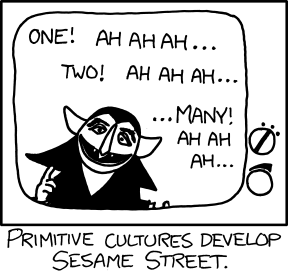
Pic courtesy of the utterly wonderful xkcd

"One, two, many..."
Anon

You're probably thinking of one of two things here.  Either some deep-Amazon tribe you vaguely remember hearing of that can't count past two, or if you're like me then you're thinking of Detritus the troll in Terry Pratchett's wonderful Men At Arms.

What does this have to do with Alex Bellos' fun new book?  Well, he's in the first camp, and does a great job of filling in the details on what I'd always thought was maybe something of an urban myth.  Tribes who don't count past two(ish) do exist, and it's not as simple as you'd think - sometimes you simply need "a few", we still do in the western world most of the time, "ish" is probably used more often than exact numbers in everyday life, and for good reason.  Bellos uses this as a starting point for a popular maths book that doen't so much look at maths as an abstract subject but concentrates on how humans use, misuse and interact with it.

Each chapter covers a different area of maths - series, probability and geometry for example - and delves into the human side of them.  We all remember Pythagoras' Theorem from school, but how many know about the hundreds of different amateur proofs over the years?  How did a skewed bell curve get a Parisian baker into a fight with the mathematician Poincare?  Is there any point to the continued efforts to calculate Pi?

This is just as much a study of human psychology in relation to numbers as it is a book about maths, and all the more entertaining for it.

EDIT: And it also inspired a little bit of 3D modelling with Blender....


Alex's Adventures In Numberland
Alex Bellos
Bloomsbury
ISBN: 9780747597162

Sunday, 23 May 2010

Science Fiction, Sci-Fi and SF

As the blog title suggests, I'm not adverse to including a little science fiction in my definition of science.  It's a fuzzy boundary, especially when either discipline is done well, and as we know from chaotic systems like the Mandelbrot set, the fuzzy boundaries are the interesting bits...


And buried in there somewhere is the reason I'm a terrible sci-fi snob.  Sorry, but there's a side of me who always pretended to be Spock rather than Kirk when we played Star Trek, and he insists on the proper science thing.  Snobs like me make distinctions between sci-fi genres, and the only real, pure form to a geek of my sensitivities is "Hard" sci-fi.  Not soft csi-fi, not space opera, not fantasy, and definitely nothing whatsoever involving Dan Brown.   

It's all terribly precious and highly strung.

In most definitions of hard sci-fi any semi-magical futuristic events have to have a proper explanation according to the scientific thought at the time, or at least have a good stab at it.  That's where Star Trek, in my opinion, falls into the space opera category.  If you're going to base a faster than light drive on Einstein's model of spacetime then please have the decency to respect the other 60% of the theory and deal with the time dilation effects.  Honestly, it's not only lazy, it's all a bit 1920s isn't it?

Sorry.  Like I said, it's an emotional issue.  

The point is, the best science always involves an element of really good science fiction, and vice versa.  This is my pick of some great science fiction, roughly married to a good book for background reading....


Wednesday, 19 May 2010

Voyage To The Heart Of Matter

So what's missing in the world of science books?  A quick introduction to Multiverse theory?  Nope, old hat.  Hyperbolic Crochet?  Been there, done that.  


A pop-up book about the Large Hadron Collider?  Oh yes.


  When we ran a shop at the Edinburgh Science Festival recently I was tasked with selecting the books we'd stock.  There's a few obvious choices; everything written by any of the speakers for example, and the top 50 or so from our Pop-Sci section in the main shop, but the really fun bit of the job was picking the odd, quirky titles that somebody is bound to buy.  Voyage To The Heart Of Matter was the first book on that list.

It's a bit of a niche title, only eight pages long (well, four really, given the nature of pop-up books), but it's a glorious piece of paper engineering.  It covers every scale, from subatomic structure, through the ATLAS experiment with Brian Cox's "Regulation EU Scale Humans" to....well...everything.  I kid you not, there's a beautifully rendered Big Bang complete with red-shifting galaxies.

It's been a little bit more popular than the publishers expected I think...it's currently out of print, but we're promised a new edition in June 2010.  I know of at least one celebrity endorsement too....the copy we had at the Science Festival was bought by a very lovely kids science author called Lucy Hawking as a present for her dad, Stephen.  That's really cool.

Take a look at it in all its glory at the ATLAS website - you can also pre-order the new edition here.


Voyage To The Heart Of Matter - The ATLAS Experiment at CERN
Anton Radevsky, Emma Sanders
9781906506124

Wednesday, 5 May 2010

Dave Halliday, 1916-2010

I cracked a bit of a gag with our rep from Wiley publishing today along the lines of "David Halliday is coming round later to highlight some of his books".  It's a gag because Dave Halliday's book Fundamentals Of Physics is probably one of the best selling and most comprehensive physics textbooks on the planet, and having it highlighted by the author is probably the best possible way of returning it to the publisher for a refund with no questions asked.

Turns out that it's not all that funny at the moment, because Dave Halliday, physics textbook god and all round nice bloke by all accounts, died a couple of weeks ago.

Aly from Wiley was nice enough to copy me in on an internal company memo.  Dave (as I'll refer to him, as I feel like that) was clearly a person who Wiley, as a company, had a great affection for.  It had less to do with his best selling textbook, and far more to do with the fact that he clearly had a great passion for physics and just as great a passion for communicating it.  I agree...Fundamentals was the one big purchase I made as an undergraduate, and also the one book I've made a point of keeping.  In fact, I've currently got two copies, because at some point the version with the lovely essay covering the Leidenfrost effect was cancelled, and a customer in the shop was good enough to make a point of donating one to me on hearing my laments at losing it.

Dave was a proper physicist in all respects, both the practical (he worked on radar systems in WWII, placing him alongside Arthur C Clarke and Isaac Asimov), and the theoretical...his books were never afraid to nudge the side of science fiction that invariably becomes true given enough time.  By far my favourite suggestion in the book is that final degree exams should be replaced by a firewalking exercise, carrying a copy of Fundamentals under your arm, the idea being that if you believe in physics enough to walk across hot coals, and you believe enough to know just how much it could hurt if it goes wrong, then you deserve a degree.   Then again, I'm biased because I've not got a physics degree and I'd happily carry a copy of Dave's book over hot coals just on principle.

There's a lovely picture that sums up his attitude towards books, and hopefully I'll get permission to replicate it here....it's him alongside a manuscript for a recent edition of Fundamentals.....and he's only slightly taller that the stack of A4.

If you want a comprehensive undergrad level book on physics then buy "Halliday, Resnick & Walker's Fundamentals Of Physics".  If you don't, then please remember David Halliday's name, he's inspired umpteen numbers of physicists who will change the entire universe in the long run.

Tuesday, 20 April 2010

The Edge Of Physics

There's a fairly standard format for popular science books, especially ones dealing with maths or physics:

  1. Say something which on the face of it sounds ridiculous and counter-intuitive.
  2. Go back in time to the person or people who discovered the theory.
  3. Very carefully go through the theory, step by step, in a way that's hopefully comprehensible to the laymen.
Anil Ananthaswamy takes a very different and refreshing approach in The Edge Of Physics.  If you've never heard of neutrinos, the cosmic background, or dark matter then this might not be the best book to start with.  There are explanations of all three, but they're relatively cursory and jump fairly quickly into the meat of the book - a round-the-world trip covering every continent and visiting some of the biggest and most audacious experiments currently being attempted.

It's a refreshing change - this is a very real look at the people who are currently sat in high altitude deserts, or freezing cold icecaps, or anywhere else that counts as remote and inhospitable, and the outrageously big, expensive and precise machines they're using to probe space and time.  You're just as likely to find accounts of the physicist's favourite drinking games and running jokes as you are an explanation of what neutrino oscillation is and why it's important.  It's a book that's very much about the human side of the experiments, the dangers, the Heath Robinson solutions so often employed and the humour that has to go hand in hand with jobs that are as far removed from the dusty, dry popular perception of theoretical physics as it's possible to get.

The LHC, the current poster-boy, get a good going over, as does the far more established (by a century or so) Mount Wilson observatory.  The part I particularly enjoyed was the coverage of two of the biggest neutrino telescopes in the world, one suspended in the depths of Lake Baikal and the other embedded in cubic kilometres of the Antarctic ice cap.  

This is a book that's not only to be applauded, but even made into a very cool TV show.

The Edge Of Physics
Anil Ananthaswamy
Duckworth Overlook 
ISBN: 9780715637043

Tuesday, 13 April 2010

Edinburgh Science Festival 2010

Wow.  The Edinburgh International Science Festival has always been a bit of a big deal, but this year is noticeably bigger and better than previous years.  There's a huge range of events on, from kid friendly talks involving bangs and smells to lectures on exactly why E=mc^2, and everything in between...and then some.

My colleague Ann and I are running a bookshop in the Big Ideas venue, very tolerantly hosted by Edinburgh University's Informatics Forum, and our sales seem to show a few interesting things about the book-buying public's interest in science.  Now whilst we're selling books tailored to each event (usually written by the speakers) it's a wide ranging sample of titles - the selection is dominated by our popular science section from the local shop, plus a proportional selection of the more advanced stuff...for example Jeff Forshaw was nice enough to sign a copy of Dynamics And Relativity for me.  This is (L->R) me, him, Ann, Jeff's sidekick Brian, Ben and Imran.  The ones who aren't professional particle physicists are me and my geekier colleagues.


It's become very clear however, that there's two big things catching the public imagination.  The big sellers subject-wise are physics (particularly the extremes of relativity/cosmology and fundamental particle physics, which join up at the back in a very Eddie Izzard way) and psychology/psychiatry.

Brian Cox and Jeff Forshaw's Why Does E=mc^2 is unsurprisingly the number one given both Prof. Cox's current renown and the fact that it's an excellent book, but it's very closely followed by Antimatter by Frank Close, a bit of a surprise hit considering it's always been a bit of a constant but slow burner in our main shop.  (There's a pretty cool Blackwell podcast about it here,)

Marcus Chown continues to be a big seller, initially heading the leaderboard, with in my opinion some of the best popular physics books going, and ones that aren't afraid to tackle the more controversial and wacky (read "interesting" in my book) topics like Multiverse theory and alternatives to accepted theories.

On the psych side Kathleen Taylor's Cruelty has been very popular, and out of nowhere the diametrically opposed Stumbling On Happiness by Daniel Gilbert has been so keenly and unexpectedly snapped up that we've had to beg steal and borrow copies from all over the UK just to keep it on the shelf.  Ian Deary has also been incredibly prominent, particularly his Intelligence: A Very Short Introduction.


And to finish, there's a few odd little titles that deserve mentions.  Daina Tiamana's Crocheting Adventures With Hyperbolic Planes is the quirky hit it deserves to be, especially with some of the speakers.  The guys from the LHC really enjoyed the masterpiece of paper engineering that is Voyage To The Heart Of Matter, clearly the best pop-up book about the Large Hadron Collider ever created.  (EDIT: Full review here)

And there's no way to sign off from an Edinburgh SciFest report without special mention to the Edinburgh Geological Society for their superb collection of publications, particularly Building Stones Of Edinburgh (which suffers from a fairly prosaic title when it's a far more interesting book than it sounds) and Discovering Edinburgh's Volcano (which suffers from only being £1.50 when it's easily worth more).  As an aside, I'm kind of proud of pushing EGS titles given the fact that Edinburgh is pretty much the birthplace of modern geology....buy their books (ideally directly from them) and support a great local amateur society.


The Big Ideas venue deserves a mention in its own right, the combination of a science festival, bookshop and cafe has created a pretty cool space that has developed a real buzz; I've had some fascinating chats with a mountain biking maths teacher called Karen, a physics prof who wanted to know why I'm in to physics ("Sheer curiosity, if you ask 'but why?' often enough you get to physics..." was my honest answer), and a whole legion of volunteers working some silly hours for free just because they're geeks and damn proud of it.

There's still a weeks worth of events left....see you there!